







Psychology Students Gain Research Insight from Penn State Expert Steve Borrelli
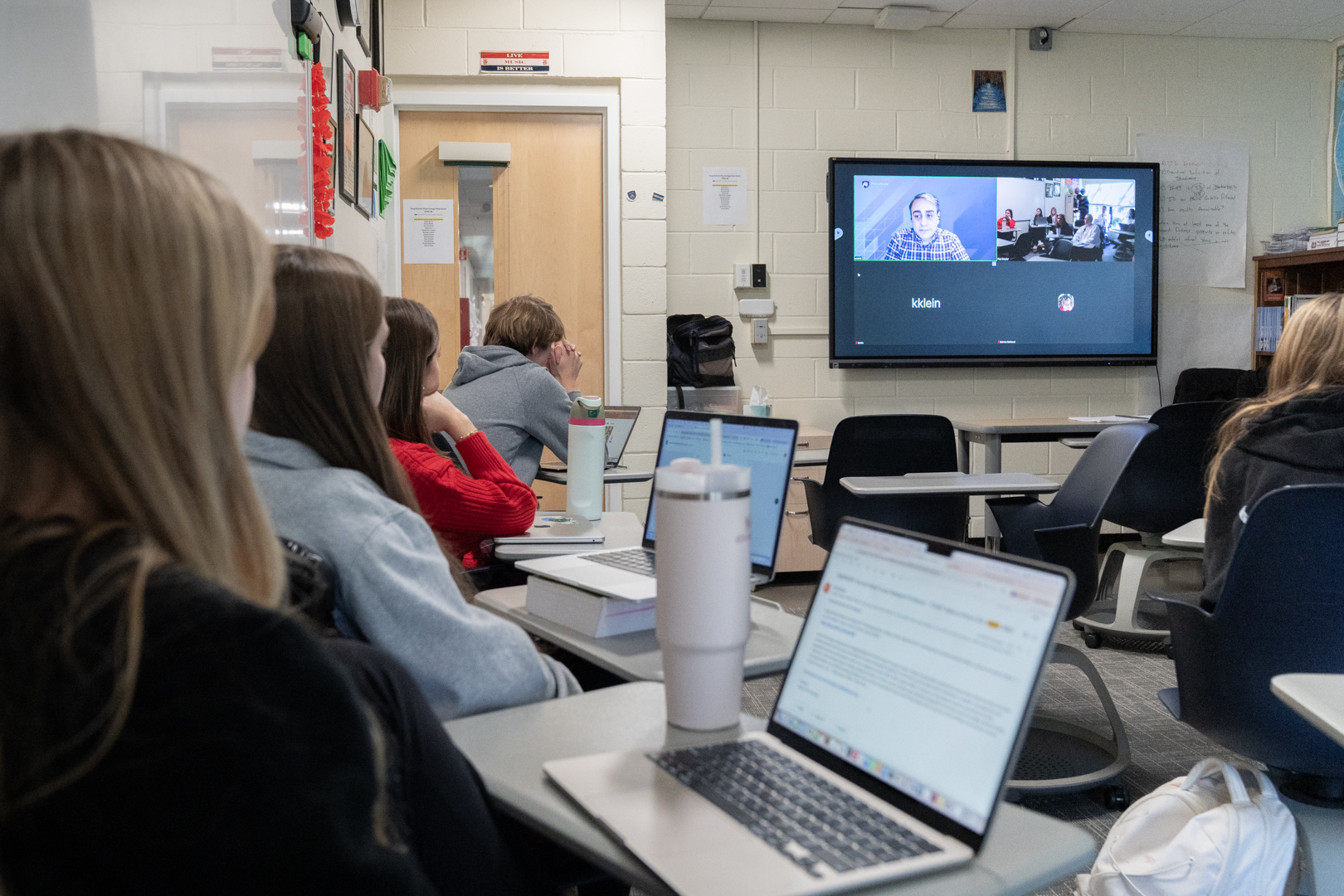
Students in Upper School Post AP Psychology recently welcomed Steve Borrelli, Head of Library Assessment at Penn State University Libraries, for a virtual presentation that offered students insight into how large-scale research is conducted at one of the world’s leading university library systems. Borelli spoke with students about the research surveys they had designed as part of independent projects and offered suggestions for improvement using tools from professional academic research methods.
The visit was coordinated by Social Sciences teacher Paul Snyder, who met Borrelli through a mutual friend after graduating from college.
“Beyond AP Psychology is designed to allow students to extend their learning from AP Psychology by focusing on an area that captured their interest and pursuing it through guided and independent research,” said Snyder, who noted that several students are currently designing and administering surveys as part of their work, and Borrelli’s expertise helped them refine their approach.
Students found the visit especially relevant to their own research interests, which include parenting styles and personality traits, short-term memory and recall, occupational therapy for non-verbal individuals, and the relationship between social media use and well-being.
“I found it interesting when Mr. Borrelli discussed the extent to which Penn State uses surveys to its benefit,” said Elizabeth Liebau ’26. “I thought it was really valuable that surveys are used to determine things in student interest, and it reinforced the importance of surveys in research.”
The conversation also prompted students to think more carefully about how survey design influences participation and trust.
“I appreciated being able to hear about the best ways to make a survey that people are actually going to want to take,” said Kayla Barta ’26. “This could mean including my name to make it more personal, a short summary of what the survey is going to be used for, or reassuring the participants that their answer will not be shared or exposed.”