


Cross-Division Learning Sparks Curiosity in Grade 4 Squid Dissection
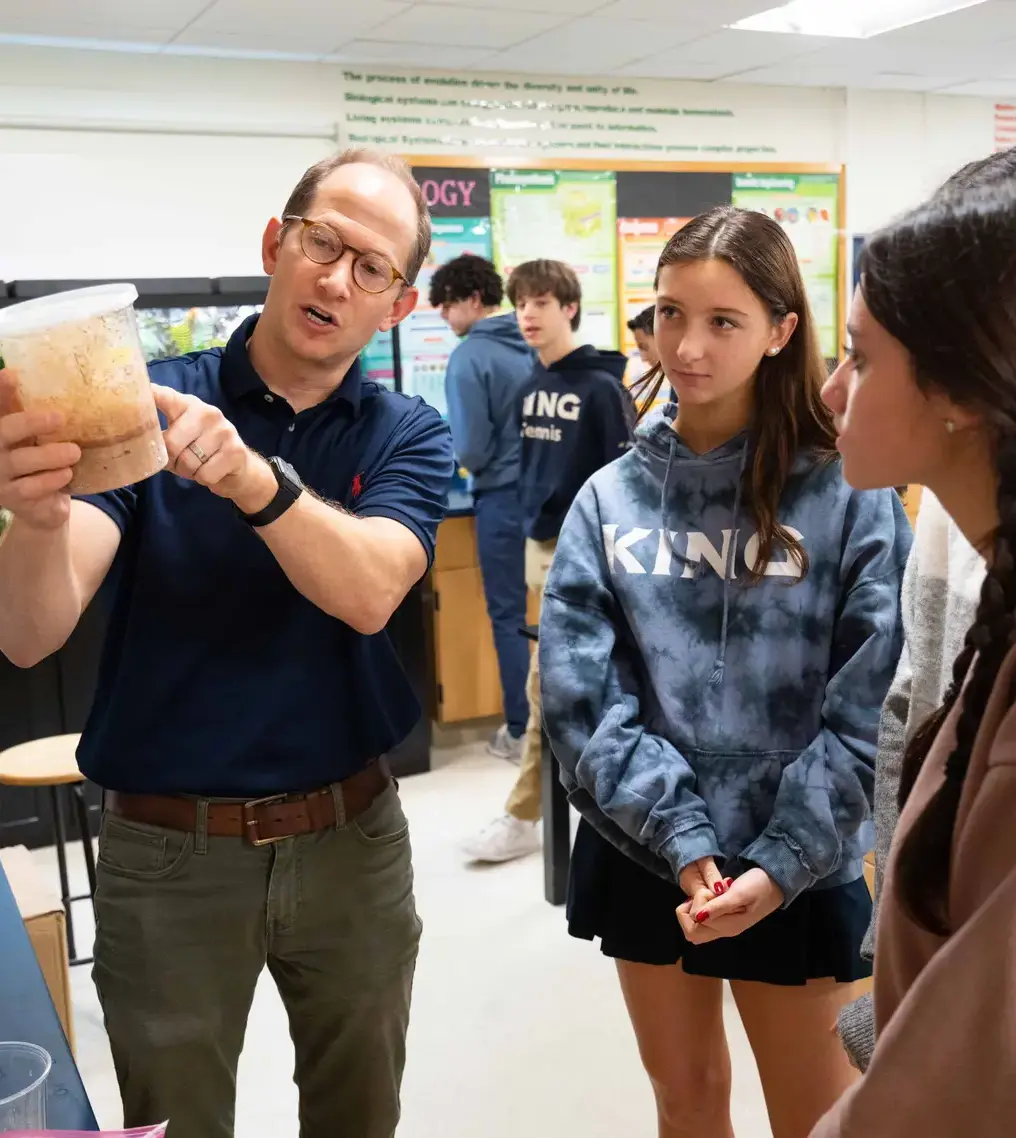
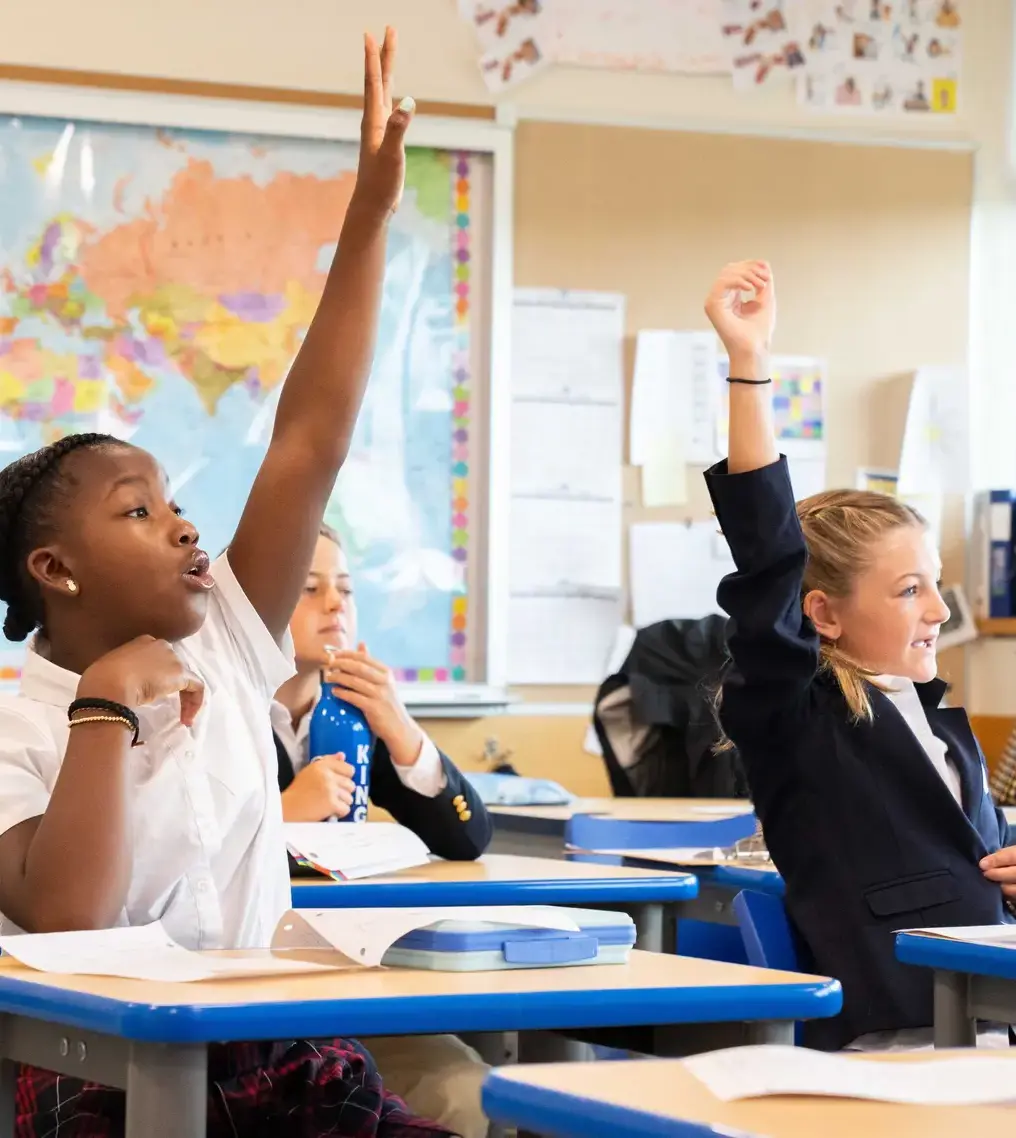
On January 21, upper school students joined Grade 4 students for a hands-on squid dissection, creating a lively cross-division learning experience. In a lab filled with delight mixed with “gross” and “pee-yew” reactions, students worked under the guidance of science teachers Jay Hill and Shevon Morris. The older students assisted by guiding their younger peers through each part of the investigation as they explored the squid’s external and internal anatomy.
“My main goal is to spark genuine curiosity and wonder in these younger students,” said Hill, who teaches science in the Upper School. “At this age, they're naturally excited about hands-on exploration, and squid dissections are perfect for that. There's something unforgettable about actually seeing how an organism is built. I want them to walk away thinking, ‘Science is something I can do and love.’”
That approach resonated with upper school student Colette “Coco” Liu ’29.
"As we dissected the squid, I realized that kids make good scientists because they’re more willing to take risks,” she said. “Since they don’t know what they don’t know, they ask bold questions and innovate approaches that wouldn’t occur to an adult."
The reactions of the younger students reflected that observation.
"I thought it was cool to see the different parts of the squid, like how the beak was so pointed and how the eyes are built into the body,” said Ruby Shah ’34. Her classmate Emmett Goodband ’34 agreed. “Taking out the eyes and tentacles was my favorite part,” he said.
Morris noted that the experience built on her recent Grade 4 lessons about vertebrate classification.
“Because students already understood shared characteristics within animal groups, they could make meaningful connections between specific structures and how those structures help animals survive in different environments,” she said. “This pushed them beyond naming traits to thinking about how and why traits are important.”
The experience also highlighted the value of cross-divisional collaboration at King.
“When Grade 4 students see an upper school teacher invested in their learning, it helps them envision themselves as future scientists and future members of our upper school,” said Hill.
By working together across divisions, teachers adapt lesson content to align with each class’s curriculum goals, ensuring that shared experiences both deepen learning and strengthen students’ sense of belonging within the broader school community.
“I keep the focus on observation and discovery rather than memorization,” he said. “When we look at structures like the beak, tentacles, and ink sac, and ask questions like ‘Why might a squid need this?' or 'How does this help it survive in the ocean?' students make real connections between what they see and how organisms adapt to their environments, without getting overwhelmed by terminology.”